 July 10, 2024 9:21 am
Published by Iain Strachan
July 10, 2024 9:21 am
Published by Iain Strachan
Urgent international cooperation is required to provide small island states and territories with the information they need to respond effectively to the existential threat of climate change. Many parts of the world most at risk of sea level rise and other damaging impacts of climate change are among the least prepared to meet these challenges, because current climate models don’t accurately represent such small geographic areas. The majority of global models used to predict future climate and weather change operate... Read More
 June 27, 2024 11:35 pm
Published by Stephen Gray
June 27, 2024 11:35 pm
Published by Stephen Gray
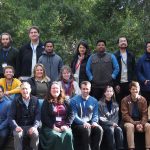
21st Century Weather has joined forces with Climate Extremes to host our first winter school. Not surprisingly, we chose to talk about the weather. About 60 students and ECRs from all over Australia converged on Monash University for a week to hone their skills in key concepts of how weather and climate work and interact. Lecture topics ranged from the theoretical concepts that describe the evolution of individual weather systems to their interaction with large-scale modes of climate variability as... Read More
 May 22, 2024 3:48 am
Published by Iain Strachan
May 22, 2024 3:48 am
Published by Iain Strachan
21st Century Weather congratulates our Chief Investigator Nerilie Abram on being elected a fellow of the Australian Academy of Science. Nerilie is a Professor of Climate Science in the Research School of Earth Sciences at The Australian National University in Canberra. She is a Deputy Director of 21st Century Weather, and also a Chief Investigator of both the ARC Centre of Excellence for Climate Extremes and the Australian Centre for Excellence in Antarctic Science. Fellows of the Australian Academy of... Read More
 April 29, 2024 12:36 am
Published by Iain Strachan
April 29, 2024 12:36 am
Published by Iain Strachan
Call for proposals open now! About this project The climate crisis is a global issue strongly influencing the evolution of art music: shaping new directions in creative practice and informing conceptual frameworks. Music has an important role to play in climate crisis discourse, by offering a sonic pathway to bridge the gap between data, understanding, reflection, and action. While climate change is often described as ‘global’ warming, we all experience it as a change in the weather where we live.... Read More
 April 11, 2024 5:13 am
Published by Stephen Gray
April 11, 2024 5:13 am
Published by Stephen Gray
The relationship between anthropogenic climate change and global weather patterns led to the hottest year on record in 2023. Human-induced global heating combined with other important drivers and feedbacks – including persistent atmospheric blocking, droughts, marine heatwaves and El Niño – caused unprecedented heatwaves in many parts of the planet. Writing in Nature Reviews Earth & Environment’s ‘Climate chronicles’ series, 21st Century Weather Chief Investigator Sarah Perkins-Kirkpatrick and her collaborators detailed the extent of the extreme conditions. The data offers... Read More
 April 11, 2024 12:35 am
Published by Stephen Gray
April 11, 2024 12:35 am
Published by Stephen Gray
21st Century Weather Chief Investigator Dr Andrew King has been awarded the 2024 Anton Hales Medal by the Australian Academy of Science. The Medal recognises research in the Earth sciences and honours the contributions of the late Professor Anton Hales, who was the founding director of the Research School of Earth Sciences at the Australian National University. Andrew is a Senior Lecturer in Climate Science at the School of Geography, Earth and Atmospheric Sciences at the University of Melbourne. He... Read More
 April 9, 2024 4:27 am
Published by Stephen Gray
April 9, 2024 4:27 am
Published by Stephen Gray
21st Century Weather Chief Investigator Ailie Gallant has been awarded the 2024 Dorothy Hill Medal by the Australian Academy of Science. By providing support to women researchers in the Earth sciences, the Academy’s Dorothy Hill Medal honours the contributions of the late Professor Dorothy Hill and her work in opening up tertiary science education to women. Ailie is an Associate Professor in the School of Earth, Atmosphere and Environment within the Faculty of Science at Monash University. Her work focuses... Read More
 February 2, 2024 3:29 am
Published by Stephen Gray
February 2, 2024 3:29 am
Published by Stephen Gray
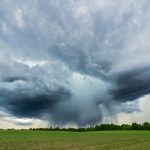
Commencing 1 February 2024, 21st Century Weather is a seven-year initiative which will research how Australia’s weather is being reshaped by climate change. Our research is informed by the needs of our industry and government partners as we look ahead to how the weather will change over coming decades. Our research will feed into better decision making on how society can harness the benefits of weather resources and how we can adapt to changes that may impact many aspects of our lives. Under... Read More
 January 31, 2024 1:08 am
Published by Stephen Gray
January 31, 2024 1:08 am
Published by Stephen Gray
Most of our weather and climate forecasts come in chances and likelihoods of events. What do they mean? How can I interpret them? And most importantly, how can I use them to make a decision. In this article in The Conversation, our Director, Christian Jakob, takes a look at the essence of probabilistic forecasting. He explains why weather forecasting is inherently not about certainty but probability. Prof Jakob reminds readers that “Our atmosphere and oceans do not behave in simple, easily predictable... Read More
 November 14, 2023 3:24 am
Published by ntechmedia
November 14, 2023 3:24 am
Published by ntechmedia
In our “land of droughts and flooding rains” the weather is on everybody’s mind. Its highest visible impact occurs when it threatens infrastructure and lives. Much of the recent public discourse on climate change has been focused on the future of severe weather events. Quite apart from these severe events, the weather plays a critical and obvious role in supporting vast amounts of economic activity in food production, renewable energy, tourism, to name but a few. This is the weather... Read More